

HOW IT HAPPENS & HOW TO DESALINATE
Saltwater Intrusion in Wells
Saltwater Intrusion and Its Impact On Well Water
If you live near coastal waters and have noticed your water tastes salty or leaves white spots on your dishes, you might be dealing with saltwater intrusion. H2O Care’s water treatment experts can help you understand this problem and find the right solution.
To learn more about the quality of your drinking water, contact us to schedule well water testing!
What Is Saltwater Intrusion in Wells and How Does It Happen?
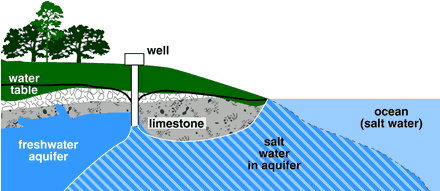
Saltwater intrusion happens when salty ocean water mixes with fresh water in underground coastal aquifers. This problem affects many New England homes that rely on private wells for their water supply.
Intrusion occurs when the different densities of fresh water and saltwater allow ocean water into the aquifer. Areas where this occurs typically support populations where water demand exceeds the groundwater recharge or replenishment rate. The likelihood of this happening increases when water is used for both household purposes and landscape or lawn irrigation.
The illustration shows what saltwater intrusion looks like underground.
Several things can make saltwater intrusion worse:
-
 Excessive withdrawal of groundwater
 -
 Watering lawns and gardens with well water
 -
 Long periods without rain (drought)
 -
 Too many wells in one area
 -
 Rising sea levels
 -
 Storm surges
Signs to Watch For: How Would Saltwater Intrusion Affect Well Water?
How do you know if seawater intrusion is affecting your well water? Watch for these warning signs:
- Water has a salty, bitter, or brackish taste
- Food and drinks made with well water taste different
- Salty residue buildup on faucets and showerheads
- Spots and film on dishes and glassware
- Soap doesn’t lather well
- Clothes feel stiff after washing
- Faster rusting of pipes and fixtures
- Corrosion on metal appliances and fixtures
- Water heater problems
- Grass, plants, and trees die or look unhealthy
- Brown or yellow patches on your lawn
If you notice any of these signs, it’s important to test your water right away. Early detection can save you money and protect your home’s plumbing.

Where Saltwater Intrusion Happens
Saltwater intrusion typically occurs in coastal areas where homes depend on private wells. Many coastal communities don’t have access to public water systems because they’re too far from the main water lines. Even areas a few miles inland can experience saltwater intrusion if the underground water supply is near the ocean.
The Solution: Reverse Osmosis (RO) Treatment
The good news is that saltwater intrusion can be treated effectively. The proven solution is reverse osmosis, a water treatment technology that removes salt from water.
Reverse osmosis was invented in the 1950s specifically to turn ocean water into drinking water. This same technology works perfectly for treating saltwater intrusion in home wells.
- How it works: The system forces water through a special membrane that blocks salt and other contaminants while allowing clean water to pass through.
- What you need: A water test will determine exactly what treatment your water resource needs. Besides salt, your water might contain iron, manganese, or hard minerals that need to be removed, as well.
H2O Care will help you choose the best system for your household needs. Contact our water quality professionals to schedule a water test!

Getting Help With Saltwater Intrusion
Saltwater intrusion occurs when ocean water mixes into freshwater aquifers, or road salt contaminates well water, causing salty-tasting water. This problem only gets worse over time without proper treatment.
H2O Care has over 30 years of experience solving water quality problems across New England. We offer advanced reverse osmosis systems and other well water treatment options.
Don’t let saltwater intrusion damage your home and plumbing. Contact H2O Care today for a water test! Our in-house experts will test your water, select the best treatment system for your home, and provide upfront pricing with no surprises.